
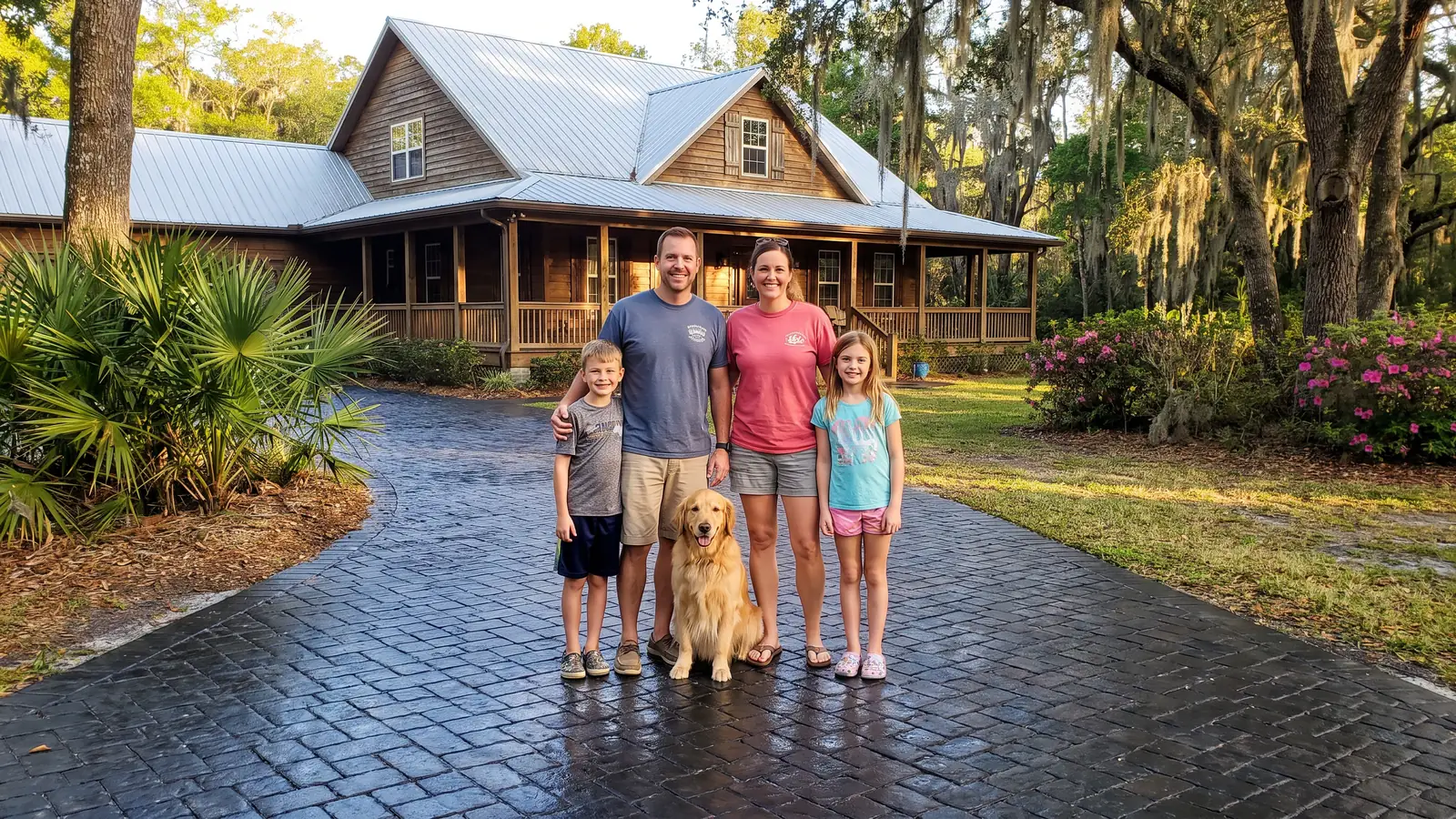
Paver sealing for Lake Asbury homes
Paver Sealing in Lake Asbury, FL
Lake Asbury grew from 2,228 people in 2000 to 11,036 in 2020; call (904) 590-4776 for a free paver sealing estimate.
- Brings out deeper paver color
- Fresh joint sand helps lock pavers in place
- Gives weeds less room to grow
- Makes the surface easier to keep clean
- Free estimate, no obligation
Request a Free Estimate
Free, no obligation.
Fast, careful paver sealing in Lake Asbury
Paver sealing in Lake Asbury starts with a free estimate from a local contractor who cleans, re-sands and seals driveways, pool decks and walkways. A contractor replies to calls at (904) 590-4776 within 1 business day, usually much sooner. New homes and older lake homes can both ask.
If your home is new, the question may be when the first coat can go on. If it is older, the question is what already sits on the pavers. Either way, the goal is one even color and full joints. To ask, you can request a free estimate.
Why hire a local paver sealing contractor in Lake Asbury?
Lake Asbury went from 2,228 people in 2000 to 11,036 in 2020, so its pavers range from brand new to decades old. To find out where yours fall, request a free estimate.
Timeline first
A contractor asks when your home and pavers went in, then gives you a price. You can say no once you have it.
Quotes with a yardstick
Regional companies commonly show $1.75 to $3.25 per square foot for cleaning, sanding and sealing. Hold any bid against that range.
Wait for new pavers
One St. Augustine area company says brand-new pavers should wait about 60 to 90 days before sealing. Share your build date.
Know your community's rules
Newer communities may set design rules. Read yours before you choose matte, wet look or a joint sand color.
Get Your Free Estimate in Lake Asbury
Tell us about your pavers in Lake Asbury.
Free, no obligation
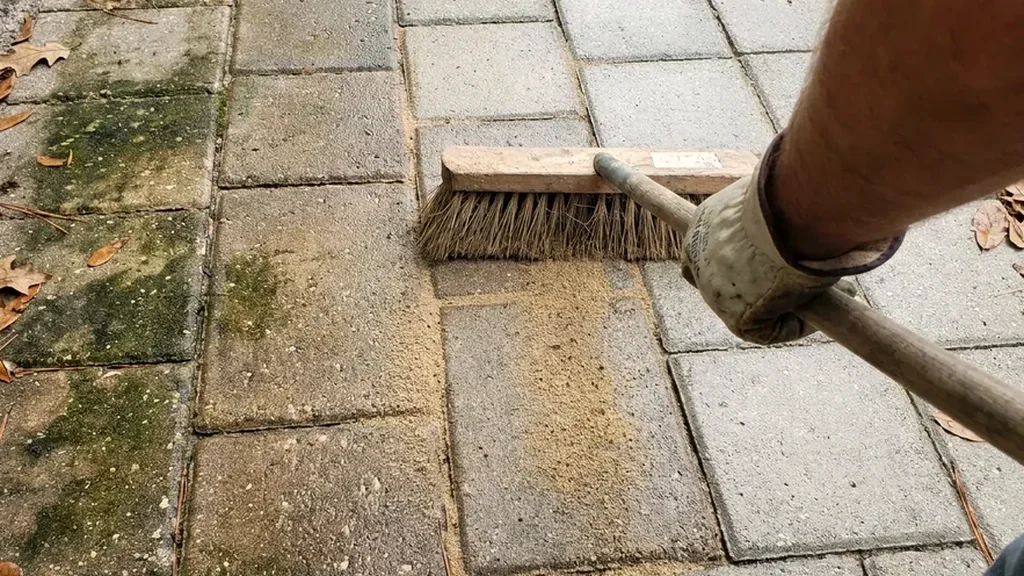
What paver problems show up most in Lake Asbury?
A first coat put on too soon
A St. Augustine area company says brand-new pavers should wait about 60 to 90 days before sealing, so trapped moisture can escape and white haze can surface and be treated first. Sealing a fresh driveway on closing week can lock in trouble. A good contractor will look at the pavers first and tell you honestly if the date should wait. A new driveway usually looks fine, which makes waiting hard. The wait is cheap compared with a haze that has to be stripped off later.
Sand that drains straight through
The USDA says the Penney soil series, with its type location in Clay County, is deep, excessively drained, rapidly permeable sand. A Clay County horticulture agent calls sites in the county generally sandy and dry. That is county information, not a test of your lot. Still, ground like that lets hard summer rain move sand out of paver joints. Open joints widen, soil settles in and weeds follow, so the sand goes back before every coat. The soil survey covers the whole county, so a lot near the creek may drain differently from one on higher ground.
Silt after Black Creek rises
Black Creek forms the north border of Lake Asbury. Not every street takes creek water, but any paver that sat under it can hold a film of silt, and that film is easy to miss until the wash. Sealer would lock the film in, so the wash has to come first. Ask the contractor to check the low end of the drive and the edge nearest the lawn, where silt tends to settle. If a creek-side lot of yours has been wet before, tell the contractor, because that history changes how long the pavers need to dry.
Acorn and leaf stains under the oaks
Water oak acorns are prolific and stain concrete where they land, UF/IFAS notes, and live oaks can spread 60 to 120 feet. A Jacksonville cost guide says pavers under trees need extra cleaning time for algae, mildew and leaf stains. If your drive or walk sits under a big oak, expect green and brown marks where the branches reach, and a longer wash to match. Cleaning has to finish before the coat, because sealer would lock those marks in. Water oaks can also start to break apart from rot at maturity, UF/IFAS says, so dropped limbs and leaf litter add to the cleanup.
Mystery coats on older lake streets
A real estate profile counts 387 tracked Lake Asbury homes built from 1967 on, with a median year of 1978. A driveway on one of the older streets may have been sealed more than once, by owners who left no record, or may never have been sealed at all. A water-based coat cannot go on top of a solvent-based one, so finding out what is on the surface comes first. Peeling, cloudy or patchy spots are clues, and a receipt from a past owner helps. Ask whether the coat on your drive was meant to be temporary, since builder-applied products differ.
Is paver sealing different at Hyland Trail than around Lake Asbury itself?
Yes, mostly in timing. Pavers in a house that new may not be ready for sealer yet. To find out where yours stand, request a free estimate.
Around the lake itself, homes are older. A real estate profile names Asbury Plantation, Asbury Creek, Glenwood Estates and Battery Bluff as nearby neighborhoods. On those streets the main question is usually the old coat and how it has aged. Name your street when you call (904) 590-4776.
Lake Asbury surrounds a small reservoir where, according to Explore Clay, the water offers fishing, kayaking and canoeing. The community sits north of Penney Farms and is spread out, so a cross street and a landmark help a contractor place you. Give both when you request a free estimate, and say whether your street is new or older.
What does paver sealing cost in Lake Asbury?
Regional companies commonly show $1.75 to $3.25 per square foot for cleaning, sanding and sealing. A Lake Asbury job moves inside that range with old sealer, lost sand and total size. A new home with a large drive and pool deck adds up to more square feet than a small patio. To get a number for your pavers, request a free estimate.
Big lots and new homes mean big surfaces, and a Jacksonville cost guide notes that larger projects cost less per square foot because prep time scales differently. Prep details still move the price, such as a locked gate, stairs or old sealer that failed and has to come off. Sand that storms took has to go back too. Ask which apply to your lot when you call (904) 590-4776, before any work is booked.
| Paved area | Typical example | Clean, sand and seal |
|---|---|---|
| 300 sq ft | Small patio or walkway | $525 to $975 |
| 600 sq ft | Two car driveway | $1,050 to $1,950 |
| 1,000 sq ft | Large driveway or pool deck | $1,750 to $3,250 |
| 1,500 sq ft | Driveway plus pool deck | $2,625 to $4,875 |
Math based on the $1.75 to $3.25 per square foot that Northeast Florida paver companies publish. Your contractor sets the actual price after seeing the surface. Repairs, leveling and stripping failed sealer are usually extra.
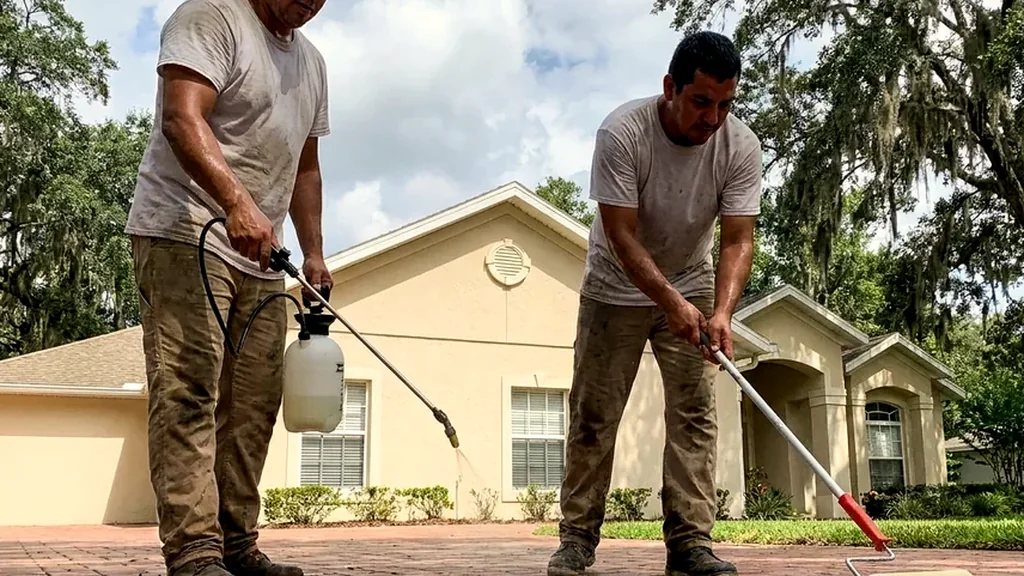
How does a paver sealing job work in Lake Asbury?
Ask when the pavers went in
The first question is the build date. If the pavers are new, the contractor may advise waiting about 60 to 90 days, and will say so instead of filling a slot. If they are older, the walk-through looks for sunken or lifted pavers. Those are reset first, because a coat only preserves what is under it. A note about which direction the drive faces helps, since sun and shade change how fast pavers dry.
Find the old coat, then clean
On older pavers the contractor checks for earlier sealer, since a water-based product cannot go over a solvent-based one. Washing follows, with extra time for oak stain and green film in the shade. Ask what method will be used, because a Jacksonville company cautions that traditional high-pressure washing can pull sand from the joints. Rinse water is kept off plants and doors where possible. Brick edging or a stone border beside the pavers gets the same gentle rinse as the rest.
Sweep new sand into the gaps
Joint sand comes out in the wash, so it is replaced before the sealer goes on. Sealer then helps hold that sand in place, according to a Northeast Florida company, which cuts washout and weed growth. On sandy Clay County ground, joints that sat empty take extra sand. A matching sand color helps the finished surface look clean. A joint sand color near the pavers is an option, and samples make that easy to judge.
Let the surface dry
Pavers must be dry before the coat. Milky, white sealer usually means the pavers were damp or the coat was too heavy, a Jacksonville company reports. After a storm the contractor waits, even if the sky has cleared. A shaded walk near the oaks may take longer to dry than a sunny drive, so it is checked last. When the forecast turns, the contractor moves the job rather than gamble on a cloudy coat.
Seal, then stay off
A sprayer lays the coat down, a roller works it into the joints, and the finish is the one you chose. A paver company in Jacksonville asks for 2 to 4 hours before anyone walks on its sealer, and 24 hours before cars. Between coats, two to five years is the span companies commonly quote. Switch the irrigation timer off until the coat has cured. Write down the product and the date, so you know when the next coat is due.
Complete paver services in Lake Asbury
At Lake Asbury the steps never change: clean the surface, put sand back, wait for it to dry, then apply sealer. What changes is the weight of each step. A new drive needs a light wash and a long wait, while an older one needs a heavy wash and a look at old coats. To find which fits yours, call (904) 590-4776.
Pavers here sit on driveways, front walks, pool decks and screened lanais. First Coast Pavers says interlocking concrete pavers resist shifting, which matters on sandy ground. Drive lanes take tires and decks take splash, so each wears differently. Send rough sizes for every surface when you request a free estimate.
Sealer is either water-based or solvent-based, and the look is either a quiet matte or a deeper wet look. The wet look darkens color but shows scuffs sooner, while matte keeps the natural tone. Newer communities may set design rules, so read yours first. To talk through a choice, call (904) 590-4776.
Storms come hard in Clay County summers, and sealer needs a dry surface. After a wet week the contractor may push your date. One sealer maker asks for 24 hours of dry weather after the coat goes on so it can cure. To pick a day, request a free estimate.
Questions to ask before you hire
- How do you handle pavers that have settled near the garage apron?
- Is the price per square foot, or one price for the whole job?
- Will the joints be refilled with polymeric sand before sealing?
- Can you tell me what is in the sealer you plan to use?
- Do you cover my plants and the landscape beds next to the pavers?
- Do you pressure wash with a surface cleaner or only a wand?
- What happens if it rains the night after the job?
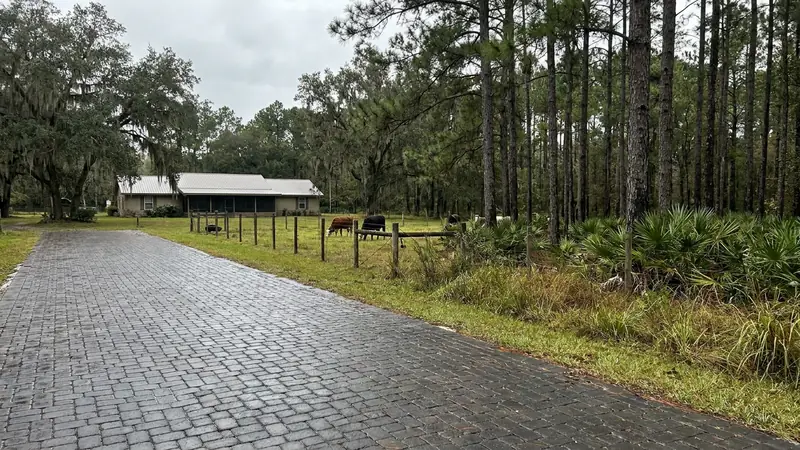
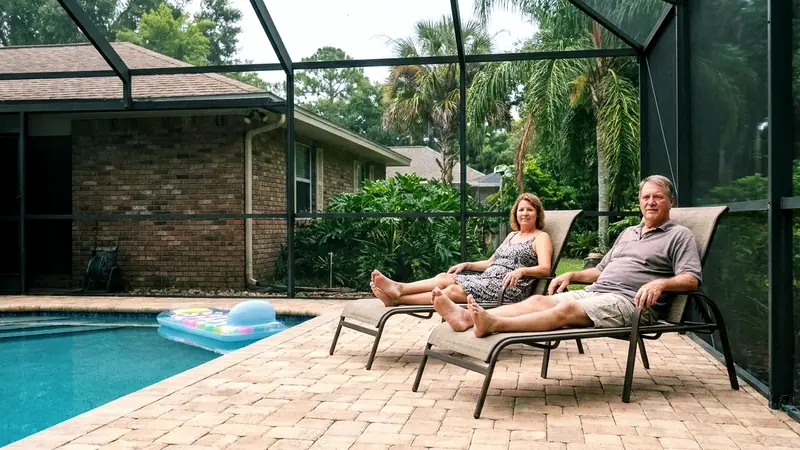
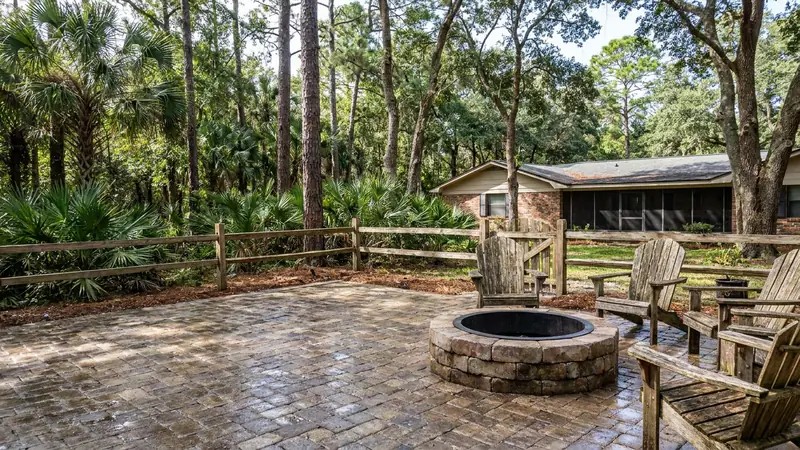
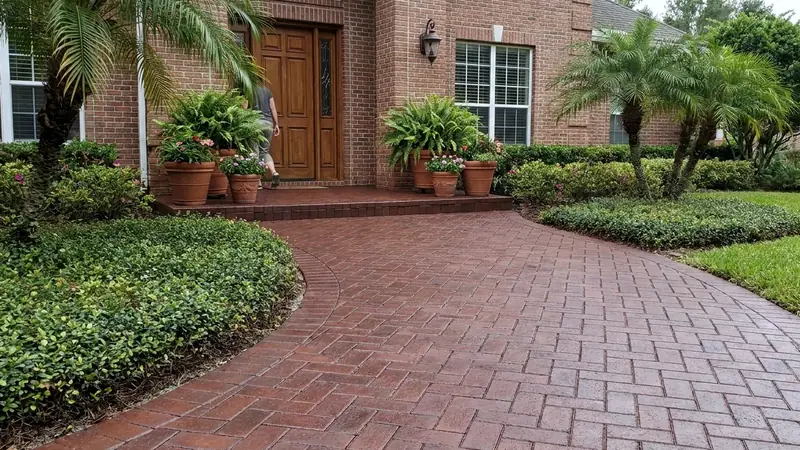
What do sealed pavers look like around Lake Asbury?
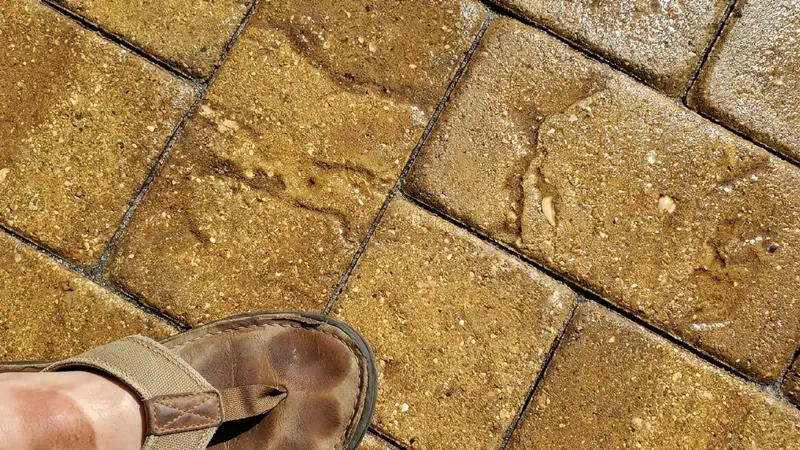
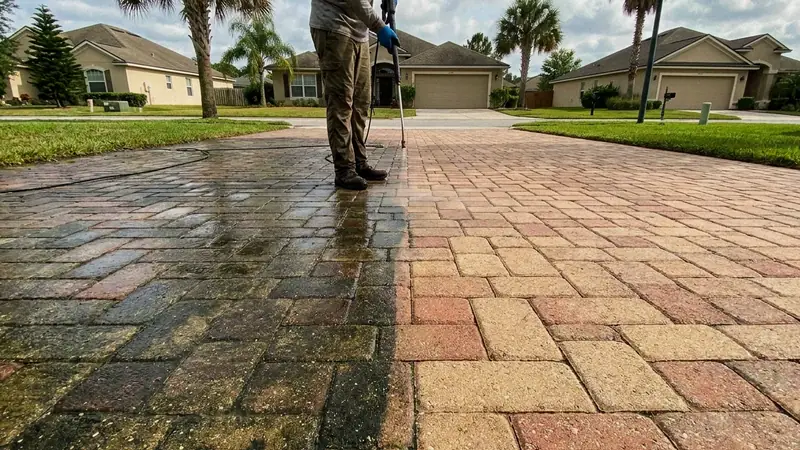
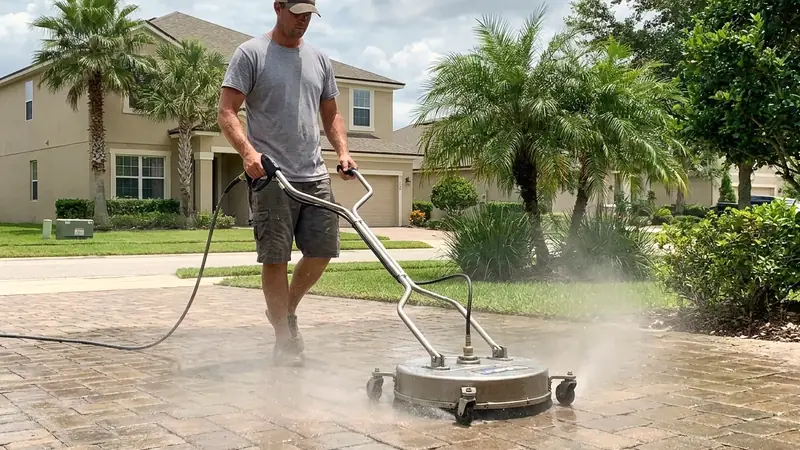
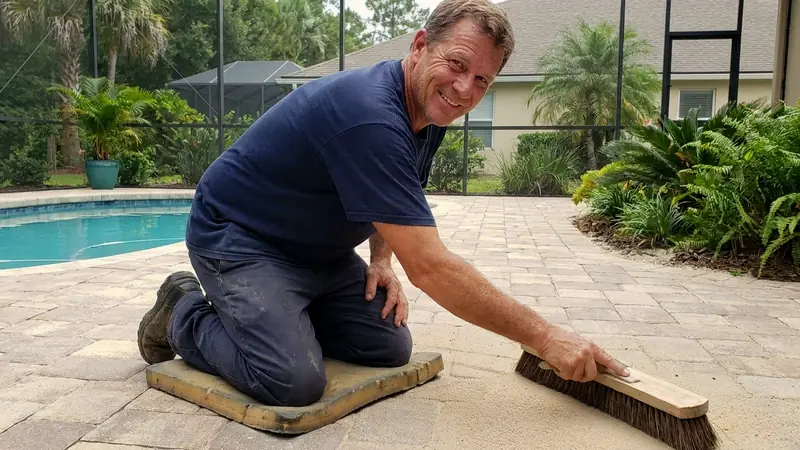
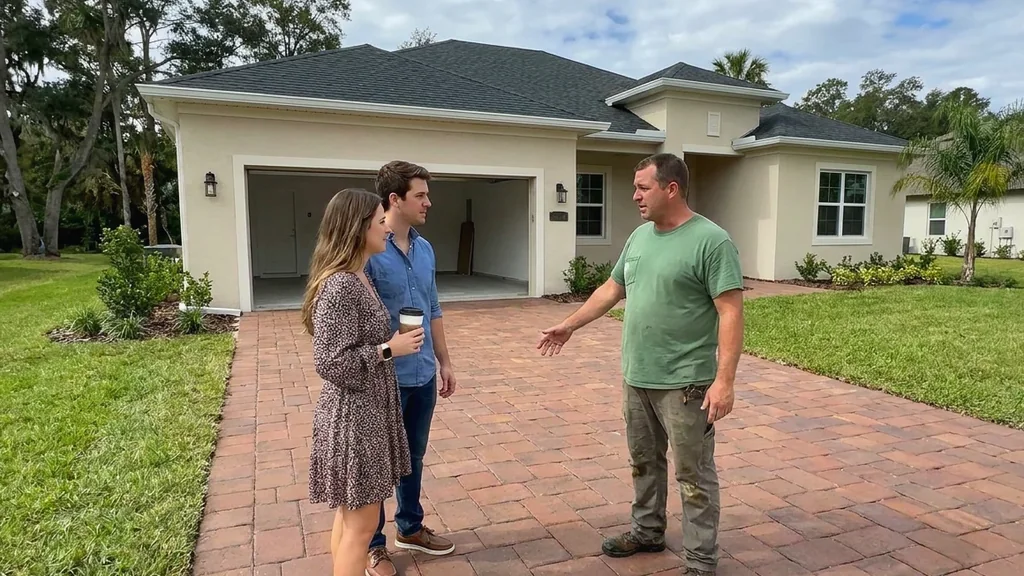
Why local matters in Lake Asbury
A contractor who works Lake Asbury knows the area has two ages of pavers: new streets in Hyland Trail and nearby communities, and older homes around the lake. The first question is how old your pavers are, because that decides whether to seal now or wait. Someone from across the county may skip it. To reach a contractor who works the Black Creek side of Clay County, call (904) 590-4776.
Roads here are mostly two lanes: County Road 220, County Road 218, Russell Road, Sandridge Road and Henley Road. Travel time matters on a job with a sealing window. To ask how a crew gets to your street, request a free estimate.
Ground and weather differ lot by lot. Sandy soil drains fast, yet a creek-side lot or a shaded walk can stay damp after the sun returns, and sealing damp pavers is how jobs go wrong. A contractor who knows this waits for pavers to dry rather than sealing on a fixed date. For a start time based on your lot, request a free estimate.
How fast has Lake Asbury grown, and what does that mean for pavers?
Quickly. Lake Asbury had 2,072 people in 1990, 2,228 in 2000, 8,700 in 2010 and 11,036 in 2020. That growth means many pavers here are young and a first coat is the question, while the older lake homes are due for a check. If you are not sure which group you are in, request a free estimate.
Those roads are often how people place their homes. Near Henley Road, Sandridge Road or the lake, call (904) 590-4776 and name your street.
Frequently Asked Questions
Do Lake Asbury pavers need sealer in this climate?
It is, once the pavers are ready. Sealer helps hold joint sand in place, and sandy Clay County ground lets rain move sand quickly. New pavers should wait about 60 to 90 days first. A sunken section needs repair before any coat, so ask for a walk across the whole surface at the first visit. Ask the contractor to look at the lanai and pool deck as well as the drive.
Are pavers a good driveway material in Lake Asbury?
They can be. One Jacksonville company says concrete pavers are popular in Florida for durability and versatility, and that interlocking pavers resist shifting. On sandy ground the base matters, and a sunken section is repaired by resetting pavers. Sealing then protects the surface and holds the joint sand, and a new coat is due every few years. Pool decks and screened lanais are often left off a first guess, so list every surface.
Why is paver sealing so expensive in Lake Asbury?
The sealer itself is the smaller part of the bill, and prep is the bigger part. A Jacksonville company puts it at two to three hours of prep per hour of sealing. Washing, sand and drying all take labor, and none of it can be skipped. Setup time does not shrink with the job, so small areas cost more per square foot. Quotes that name the sealer and the coats are easier to line up.
How much does it cost to re-sand and seal pavers in Lake Asbury?
Regional companies commonly show $1.75 to $3.25 per square foot for cleaning, sanding and sealing. Where a Lake Asbury job falls depends on old sealer, empty joints and total size. Ask for the square footage in writing, and check that the price covers sand and sealer. A quote far below the range may skip the prep. Ask whether a second coat is in the price or listed apart.
How often should pavers be sealed in Lake Asbury, Florida?
Between coats, two to five years is the span companies commonly quote. One Jacksonville company puts driveways and pool decks closer to three years and shaded walkways closer to five. A dull look, or water that soaks in instead of beading, is a sign it is time to ask for a look. Your build date and closing papers will usually answer this faster than guessing.
When can I seal new pavers at my Lake Asbury home?
Plan on waiting a couple of months. One St. Augustine area company says brand-new pavers should wait about 60 to 90 days before sealing, so trapped moisture can escape and white haze can surface and be treated first. Ask the contractor to check the pavers before booking a date, and ask what the contractor looks for to tell that they are ready. A small repair before sealing costs less than a dip that stays for the life of the coat.
Can new sealer go over an old coat on my Lake Asbury pavers?
Sometimes, depending on the old product. Water-based sealer cannot go over solvent-based sealer, which means the old product has to be named first. Failed or peeling sealer may need to come off. A receipt from the last owner can save a lot of guessing. Keep pets and kids away from the surface until the contractor says it has cured.
How long until I can use my Lake Asbury driveway again?
Most people can walk on it again in a few hours and park on it after roughly a day. A Jacksonville paver company says its sealer needs 2 to 4 hours before walking and a full day before vehicles. Rain or damp air can stretch that window, so the contractor will say when your own pavers are ready. A small test patch on the apron is a fair request.
Ready for a Free Estimate in Lake Asbury?
Call (904) 590-4776 and tell us about your pavers.
Free, no obligation